The global beauty industry is expanding, but rising demand does not guarantee dependable makeup brush production. McKinsey’s 2023 beauty market analysis estimates that the sector could reach about $580 billion by 2027. Growth creates opportunities for buyers and manufacturers. It also creates crowded supplier lists, inconsistent quality, and rushed claims.
So, how to find a reliable makeup brush manufacturer? Start with evidence, not attractive catalog photos. A capable factory should explain its bristle materials, ferrule construction, handle coating, adhesive selection, and inspection process. Ask for production samples from different batches. Check whether the brush keeps its shape after washing and whether loose fibers appear on a clean white cloth. Small details reveal large problems.
Professional buyers should also request factory audit records, product test reports, material declarations, and traceability documents. ISO 22716 offers recognized good manufacturing practice guidance for cosmetics, although it does not replace product-specific testing. The U.S. FDA’s cosmetic guidance also emphasizes responsible safety substantiation and accurate labeling. These references help establish a serious compliance baseline, not a perfect guarantee.
Price still matters. However, an unusually low quotation may hide weak glue, unstable supply, or high defect rates. I have seen supplier evaluations focus heavily on MOQ while overlooking replacement terms and corrective-action procedures. That is a mistake worth revisiting. A reliable partner should provide clear lead times, realistic capacity, transparent communication, and documented quality controls. The best decision combines factory experience, independent verification, sample testing, and practical judgment. Reliability is demonstrated over repeated orders. Words alone are insufficient.
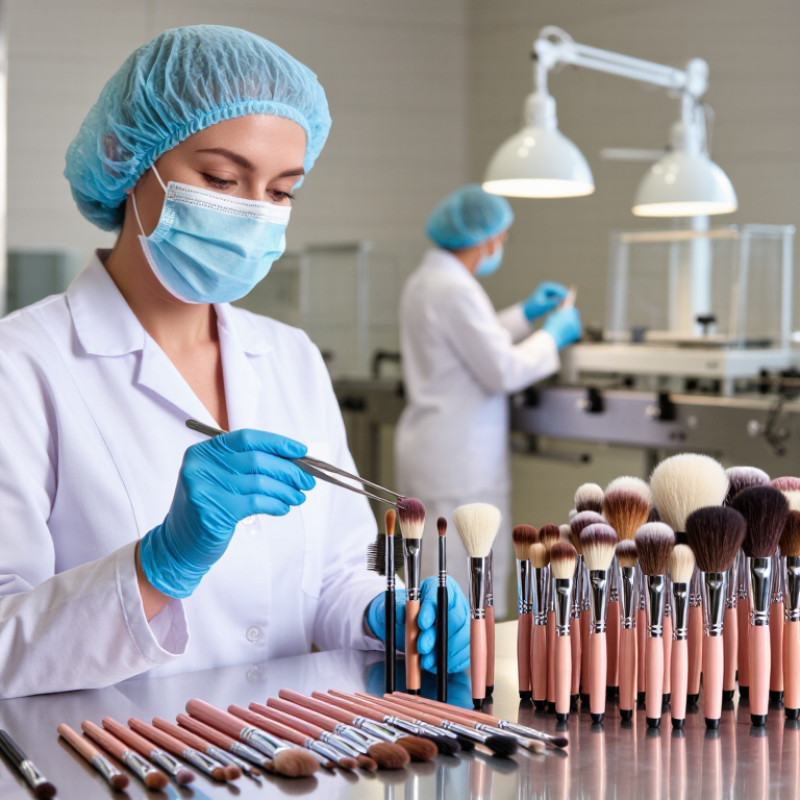
A top makeup brush manufacturer is defined by more than attractive packaging or a large product catalog. Its expertise appears in small details, such as balanced handles, secure ferrules, and evenly shaped bristles. During product reviews, I look for brushes that feel stable in the hand and remain comfortable after repeated washing. Performance should be consistent across samples, not only in one carefully selected piece.
Reliable manufacturers document their materials, production steps, and quality checks. They should explain where fibers come from and how suppliers are evaluated. Clear testing records can cover shedding, odor, dye transfer, handle strength, and ferrule adhesion. These details demonstrate professional knowledge and make quality easier to verify. A serious factory also uses trained inspectors, defined tolerances, and batch tracking.
Communication reveals practical reliability. A capable manufacturer answers technical questions directly and reports production problems before shipment. It should provide realistic sampling timelines, transparent pricing, and clear packaging specifications. No factory is perfect. I would question any supplier claiming zero defects.
Vague promises are not enough. More valuable is a documented correction process, supported by inspection photos and replacement procedures. Even small issues, such as uneven trimming or loose glue, deserve careful review because they affect user experience and long-term trust.
A reliable makeup brush manufacturer should prove quality through documented standards, not attractive samples alone. ISO 9001 indicates a controlled quality management system, including inspections, corrective actions, and traceable records. For cosmetic tools, material safety also matters. Factories should test fibers, adhesives, coatings, and handles for restricted substances under the regulations of your target market. Compliance documents must match the actual production materials. A generic certificate is not enough.
In practical factory evaluations, inspect brush density, symmetry, ferrule strength, and handle finishing. Ask for wash-cycle testing and shedding results. A quality brush should retain its shape after repeated cleaning and normal pressure. Check whether workers follow written procedures, use calibrated equipment, and record rejected units. I have seen attractive samples hide weak adhesive joints. That mistake becomes obvious after several washes. No certificate guarantees perfect production.
Tips: Request a recent inspection report, material declarations, and batch traceability records. Compare pre-production and mass-production samples. Ask how complaints are investigated and corrected. Visit the facility when possible, or arrange an independent audit. Pay attention to simple details, such as covered storage, clean worktables, and separated materials. These observations are not formal proof, but they often reveal whether standards are genuinely practiced. A supplier may meet ISO requirements on paper, yet still need stronger training or sampling controls. That is worth questioning.
How to Evaluate a Makeup Brush Manufacturer’s Product Range
A reliable makeup brush manufacturer should offer more than a large catalog. Examine the range by use, not by product count. It should cover foundation, powder, blush, eyeshadow, eyeliner, and detail application. Each shape should have a clear purpose. Ask for fiber type, density, cut method, ferrule material, handle finish, and cleaning guidance. Vague specifications suggest weak technical control.
Request samples from different production batches. Test softness, pickup, blending, shedding, and shape recovery after washing. Check whether the ferrule remains firm and whether the handle develops cracks or odor. A documented inspection process, such as batch sampling and pull testing, adds credibility. Product photos are not enough. They can hide uneven trimming.
I once reviewed a range that looked impressive online but lacked small eye brushes. That gap affected real application work. The mistake was trusting the catalog too quickly. Compare standard items with custom designs, refill options, packaging choices, and minimum order quantities. Also ask how the manufacturer handles defects and keeps specifications consistent. A supplier that welcomes technical questions usually understands professional requirements. Still, written answers should be verified through physical samples and production records.
| Evaluation Dimension | What a Reliable Manufacturer Should Offer | Practical Benchmark | Evidence to Request | Suggested Weight |
|---|---|---|---|---|
| Product Category Coverage | A balanced range covering face, eye, lip, complexion, detail, and multipurpose brushes. | At least 6 core categories and approximately 20–40 standard brush shapes. | Current catalogue, product index, technical drawings, and physical samples. | 15% |
| Fiber Selection | Options for synthetic fibers, natural hair, mixed fibers, and different softness or density levels. | At least 3 fiber grades with documented diameter, length, crimp, softness, and shedding performance. | Fiber specifications, supplier declarations, tensile or shedding test records, and sample comparisons. | 12% |
| Brush Construction | Stable ferrule attachment, consistent fiber insertion, balanced handles, and clean finishing. | No visible gaps, loose ferrules, sharp edges, excessive odor, or noticeable variation between samples. | Cross-section samples, assembly specifications, in-line inspection records, and approved reference samples. | 15% |
| Customization Capability | Support for custom shapes, fiber blends, handles, ferrules, colors, coatings, logos, and packaging. | Prototype development within 7–21 calendar days after receiving complete specifications. | Customization workflow, tooling requirements, prototype timeline, artwork guide, and sample approval process. | 12% |
| Minimum Order Quantity | MOQ levels that match the buyer’s launch size without compromising production control. | Common private-label ranges are approximately 500–3,000 units per style; fully custom designs may require more. | Written quotation showing MOQ by style, color, packaging format, and customization level. | 8% |
| Sampling and Lead Time | Clear timelines for stock samples, customized samples, production, and replenishment orders. | Stock samples: 3–7 days; customized samples: 7–21 days; bulk production: commonly 30–60 days after approval. | Production schedule, capacity statement, sample log, and records of recent completed orders. | 10% |
| Quality Control | Documented inspection at incoming-material, in-process, pre-shipment, and packaging stages. | Uses approved samples, written tolerances, batch records, and a recognized sampling plan such as ANSI/ASQ Z1.4. | Inspection checklist, defect classification, corrective-action reports, and independent inspection acceptance criteria. | 15% |
| Safety and Compliance | Materials and finishes suitable for intended cosmetic use, with traceable compliance documentation. | Provides material declarations, restricted-substance information, packaging compliance, and market-specific documents. | Declarations of conformity, laboratory reports where applicable, safety data, and batch traceability records. | 8% |
| Sustainability Options | Lower-impact fiber, recycled or responsibly sourced handle materials, reduced packaging, and waste controls. | Offers at least 2 documented material or packaging alternatives with supplier-level supporting evidence. | Material certifications, recycled-content claims, packaging specifications, and waste-reduction records. | 5% |
| Total Evaluation Weight | 100% | |||
A reliable makeup brush manufacturer should provide clear, verifiable certification records. A certificate image alone proves little. Check the certificate number, issuing organization, validity period, and registered factory address. Confirm that the document covers brush production, quality management, or relevant material testing. A quality certificate for a trading office may not cover the actual workshop.
Look closely at the certification scope. It should match the products you plan to order. Ask for recent audit records, test reports, and material declarations. These documents can reveal testing dates, sample details, and responsible laboratories. Pay attention to ferrule metal, adhesive safety, handle coating, and synthetic or natural bristle specifications. Small details matter.
Reviews should show repeated patterns, not only high scores. Search for comments about shedding, uneven trimming, odor, packaging damage, and delivery consistency. Customer photos are useful. So are detailed responses to complaints. A manufacturer that explains corrective actions may be more dependable than one with perfect ratings. Still, reviews can be incomplete or outdated. I once focused too heavily on polished documents and overlooked slow sample replies. That was a warning. Order samples before committing to bulk production. Check whether ten brushes show similar shape, softness, and attachment strength. Reliable evidence is usually practical, dated, and easy to verify.
A reliable makeup brush manufacturer should be compared through evidence, not attractive quotations. McKinsey & Company projects the global beauty market could reach about $580 billion by 2027. This growth increases pressure on suppliers, especially during seasonal launches. Ask for a detailed price sheet covering bristles, handles, ferrules, packaging, sampling, tooling, and freight. A low unit price may hide high mold fees or expensive minimum orders. Compare the landed cost, not just the factory quotation.
Customization needs practical testing. Request a physical sample with your required bristle density, handle coating, logo placement, and color standard. Check shedding after repeated washing and inspect ferrule bonding under normal handling. The International Organization for Standardization recommends documented quality processes through ISO 9001, but certification alone does not guarantee good brushes. Review recent audit records, inspection photos, and corrective-action reports. Some suppliers promise unlimited design changes. That sounds useful, but it can create delays and inconsistent batches.
Tips: Ask for three quotations using identical specifications. Require a written sample timeline. Confirm who owns the mold. For production capacity, request monthly output, active production lines, average lead time, and peak-season utilization. Compare these figures with your forecast and required delivery window. A factory producing 500,000 brushes monthly may still struggle if most capacity is already booked. I would also request a small pilot order before committing to a large run. It costs more per piece, but reveals packing damage, color variation, and late communication early. Capacity claims deserve doubt. Mine did, once.
The range should include foundation, powder, blush, eyeshadow, eyeliner, and detail brushes. Each shape needs a clear application purpose. A large catalog can still miss essential small eye brushes.
Ask about fiber type, density, trimming method, ferrule material, handle finish, and cleaning instructions. Clear specifications suggest stronger production control. Vague answers deserve caution.
Request samples from different production batches. Test softness, product pickup, blending, shedding, and shape recovery after washing. Check whether the ferrule stays firm. Photos cannot reveal uneven trimming.
Look for loose ferrules, cracked handles, unpleasant odors, and uneven fiber lengths. Wash several brushes and compare their shape afterward. Ten similar samples provide useful evidence. Small differences matter.
Check the certificate number, issuing organization, validity period, and registered factory address. Confirm that the document covers the actual production site. Review its scope carefully. A certificate image alone proves little.
Look for repeated comments about shedding, uneven trimming, odor, damaged packaging, and delivery consistency. Customer photos can expose defects hidden by polished listings. Detailed complaint responses are valuable. Perfect ratings may still be incomplete.
Request quotations with identical specifications. Include fibers, handles, ferrules, packaging, sampling, tooling, and freight. Compare the landed cost, not only the factory price. Cheap units may hide expensive molds or minimum orders.
Request a physical sample with the required density, coating, logo position, and color standard. Ask for monthly output, active lines, lead time, and peak-season utilization. A factory with high output may already be fully booked. Capacity claims need proof.
Yes, when possible. A small pilot order can reveal packing damage, color variation, shedding, and slow communication. It may cost more per piece. I once trusted capacity claims too quickly, and that was a mistake.
Finding a dependable supplier begins with understanding what defines a top makeup brush manufacturer. Consistent product quality, skilled craftsmanship, safe materials, efficient production, and clear communication are essential indicators. To learn how to find a reliable makeup brush manufacturer, buyers should review the company’s manufacturing standards, quality-control procedures, material sourcing, and testing methods. A strong manufacturer should also offer a diverse product range, including different brush shapes, fibers, handles, sizes, and packaging options to meet various market needs.
Before making a decision, carefully check certifications, customer reviews, samples, and production records. Comparing pricing should involve more than selecting the lowest quote; customization capabilities, minimum order quantities, lead times, and production capacity are equally important. A reliable partner should provide transparent quotations, flexible design support, stable quality, and the ability to scale production as demand grows. Evaluating these factors together can help buyers reduce risks and build a long-term, professional manufacturing relationship.

MVX Beauty